Secrets of Chinese Cuisine
Fresh meat and fresh vegetables are used in countless ways in Chinese cuisine for a complete and balanced meal.
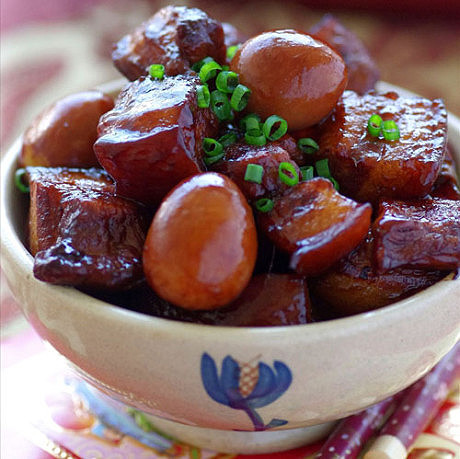
South Cantonese cuisine uses abundant natural foods steamed or cooked at very high heat. The spice is just a pinch of soy, ginger or spring onion.
The cuisine of the Beijing cuisine against the harsh climate and geographical conditions of the north is the sweetly warming hotpots, doughnuts and of course the famous Beijing duck.
Sezuan food is spiced with hot chilies and strong spices.
In Shanghai, the ingredients are slowly stewed into rich meat and fish dishes.
"If there is something we take seriously, it's not religion or study, it's food," said Chinese student Lin Yutang, and so people want to learn things about food. Of the world's finest cuisines, Oriental cuisine would be ranked first in terms of their food preferences and the appreciation and respect they have for perfectional foods.
Eating as a whole, nowadays a popular way of thinking in the Western world, was originally Confucius' idea. Good ingredients, cooked in the right way and served with just the right sauce was the only suitable way to serve food. Otherwise, it was not worth going to eat. Be economical, don't waste, is also an Eastern chef's idea, so everything edible is meant to be eaten.
No food is considered to be preferable to another, but all are meant to be served in the best possible way because it is intended to nourish the spirit, soul, and body.
Wok cooking became the basis of oriental cooking because of the difficulty in obtaining firewood. Thus, food had to be prepared quickly to save the trees. This remained the basic method of oriental cooking, and the food thus prepared is often fresher and more nutritious than if it had been prepared in a Western-style.
The Orientals introduced the Western countries as dining experiences and experiences. The food was served in such a way that the diner enjoys the dining experience, not just the use of a fork and knife. As a result, they started using chopsticks for food. The inhabitants of the East wanted to share their cooking skills with all the visitors. Soon, certain spices, noodles, and cooking techniques came with visitors to the west. From the West came oranges, many spices, nuts, onions, mustards, tomatoes and even sugar for the Orient.
Today, this exchange continues and many countries have welcomed Chinese, Thai, Indonesian and Japanese cuisine, while the eastern countries send their chefs to Western countries to study French, Spanish, German and North American cuisine.
Chinese food is best prepared fresh. So let the guests wait for food, not the food guests.
Foods cut into fine strips are quick to ripen, so be careful. Digestion and sometimes pre-cooking can be done in advance.
It is also worth remembering that the Chinese do not put salt in the rice boiling water.
Never leave food larger than the mouthpiece so that you can enjoy it with chopsticks if you wish.
Don't cook the vegetables too ripe. They must feel a little hard on their teeth: al dente! This keeps the taste fresh and the texture intact.
The food sauces are clear, with at most arrowroot.
All dishes - except soup, which can be served first or last - are brought to the table at the same time. Usually the Chinese serve as many different dishes as there are guests.
The food is usually served with hot tea, such as jasmine tea, or hot thick Japanese rice wine. Beer and rosé wine are also suitable as food drinks.
Map of China
Chinese Seasoning
Ginger. Ginger root tastes best when fresh. You can also use dried and ground ginger or delicious jam ginger Mei Fun.
I have a moss. Very strong red chili pepper paste.
Lao Gan Ma, crispy chili oil. Spicy and crunchy chili sauce, suitable for all Chinese dishes. Contains, in addition to chili oil. Chinese pepper, soybeans and small amounts of nuts.
Ve-tsin. Glutamate. White spice powder that emphasizes the flavor of the food.
Rice Wine. A fortified wine made from rice with a sherry flavor.


